
Get Involved - Auditions
Whether you fancy yourself onstage, backstage or offstage, Progress Theatre offers a variety of ways for you to get involved.
We’re all volunteers here, learning on the job and from each other. There’s always room for more though, so if you want to pick up a new skill, perfect an old one, or share your expertise with us, we’d love to have you.
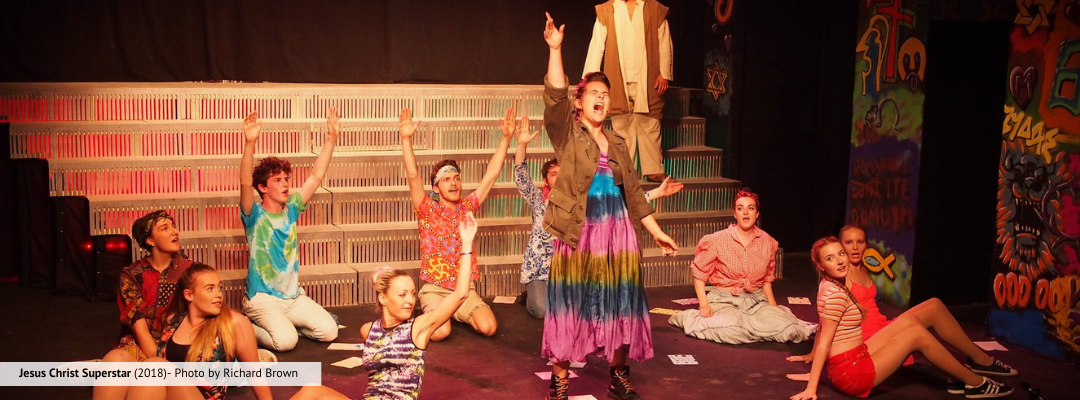
Open Auditions
Progress auditions are open to everyone: members, ex-members, and non-members. Unless the audition notice states otherwise, auditionees must be over 18.
If you are cast for a show, you will need to become a member, this is for legal and safety reasons. Financial support is available if needed.
Inclusion
Progress Theatre is committed to the principles of inclusion, and roles are open to all, including any gender identity, disability or ethnicity. Although some characters may be historical figures, auditionees of different ethnicities, disabilities and gender identities are encouraged to audition. We are committed to improving our access to all and would love to welcome you to the Progress community.
Please get in touch at [email protected]
Hear about upcoming auditions |
 |
Upcoming Auditions
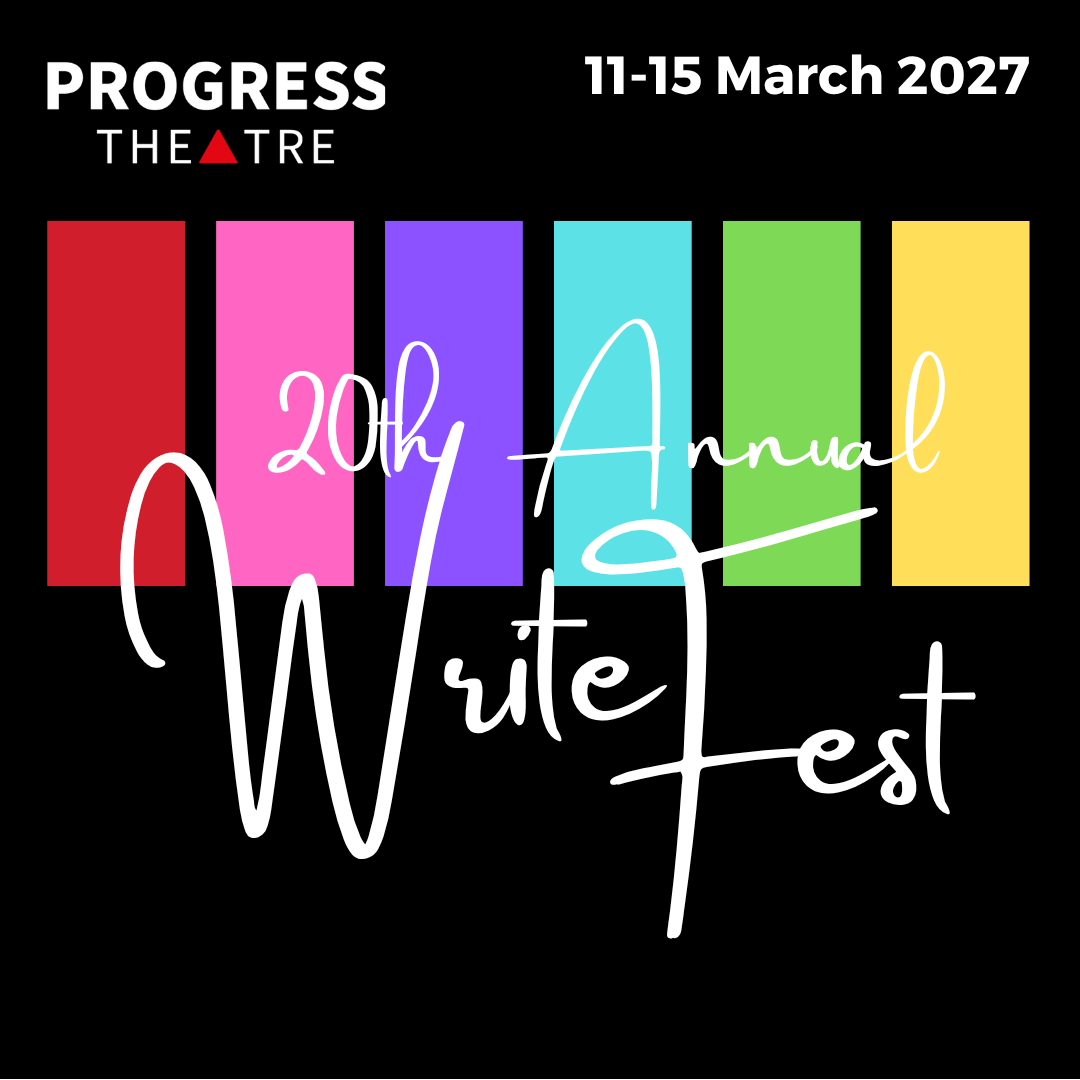
WriteFest 20
Important dates:
- Performance dates: 11-15 March 2027
- Read through date: Tuesday 20 October 2026, 7.30pm - Progress Theatre Foyer
- Audition date: Saturday 31 October 2026, 10.30am-2pm - Progress Theatre
Join us to have a fun day with some warm up exercises and readings by all attendees, where anyone can audition for any of the roles in WriteFest20.
All 21 characters across the six plays will be auditioned by ‘cold readings’, at the same time and in front of other auditionees.
IF you cannot attend on that date, but would still like to audition, please contact Paul Gallantry, the show’s producer, via [email protected]. It may be possible to arrange for a virtual audition for the roles you are interested in, that can then be shared digitally with the directors of all of the plays.
If possible please complete the online audition registration form in advance to save time on the day. This applies if you are attending in person or if you want to submit a digital audition.
Time commitment:
You will need to be free for the majority of the rehearsal period, once per week (Tue or Thu eves or Sun afternoons), one 1.5 hour slot per week, from mid-November to the middle of February and then probably more frequently until performance week. There will be five performances including a special Gala Night on Monday 15 March, the 80th anniversary of the Theatre’s first ever performance to the paying public.
Available roles:
The 21 roles are spread across the six plays as follows:
(M=Male Presenting, F=Female Presenting, A=Presenting in Any Gender)
- Carved from Coal by Andy Kempe – 3 x M (1 older, 2 younger) and 1 F. The play explores ‘survivors guilt’ linked to the Aberfan disaster of 1966.
- City Status by Amy Huntington and Moira Newton – 1 x M, 2 x F and 1 x A (younger than the others). The piece imagines a bidding pitch for Reading to become a city.
- Exit Interview: a short play by Summer Walker-Barnes – 2 x M (but could possibly be A, as long as both actors present as the same gender), one smaller and skinny, the other larger and more muscular. What really happens as we transition from living to dead?
- Game for Love by Melanie Roan – 2 x M, 1 x F and 1 x A. Three probably younger and the fourth could be older or more ‘middle aged’. How ‘Reality TV’ and the ‘Influencer’ culture plays out in the world away from the internet.
- Grateful Girls by Yvette Rizzello – 5 x F and 1 x M (Four schoolgirls, playing age of 13-14 years old, a male class teacher and the female headmistress of the school.) In the near future it is time for four teenage girls to choose their future roles in life.
- It’s Nice to Finally Meet You by Daniel Klingberg – 1 x M and 1 x F of any playing age. With the world about to end, two neighbours in a block of flats finally meet and talk.
If you would like to get a feel for the plays you can attend the ‘table read’ of all six, which is open to all, on Tuesday 20 October in the Theatre Foyer at 7:30pm.